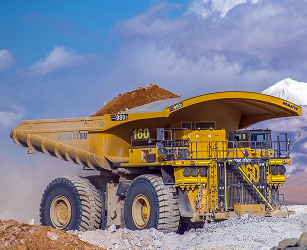
Which Mining Spare Parts Should You Stock? Start with parts that can stop production, create safety risks, have long supplier lead times, or fail frequently. I recommend classifying each part by equipment criticality, failure consequence, wear rate, repairability, lead time, and downtime cost before assigning it to on-site stock, supplier-held stock, repair, substitution, or purchase-on-demand.
- Classify every part by criticality, failure consequence, wear rate, lead time, and repairability.
- Link stocking decisions to equipment failure history, supplier lead time, and hourly downtime cost.
- Set reorder points, safety stock, minimum levels, and maximum levels using actual consumption data.
- Compare OEM, aftermarket, used, and remanufactured parts by fit, quality evidence, warranty, availability, and total cost.
- Review stockout frequency, emergency freight, inventory turns, obsolete inventory, service level, and downtime hours avoided.
!
Which Mining Spare Parts Should You Stock? A Practical Inventory Checklist
I build a mining spare parts inventory around operational consequences rather than part price alone. A low-cost seal can be more important than an expensive assembly if its failure stops a primary crusher or creates a hydraulic safety risk. The checklist below applies to surface mines, underground operations, crushing plants, processing facilities, contractors, and mixed-brand fleets.
1. Classify parts by criticality and failure consequence
Assign each item a criticality rating from 1 to 4. A rating of 4 means failure can stop production, compromise safety, damage adjacent equipment, or require a long recovery period. A rating of 1 means the failure has limited operational impact and the part can usually be purchased before the next planned maintenance window.
| Criticality | Typical consequence | Recommended treatment |
|---|---|---|
| 4 — Essential | Production stoppage, safety exposure, or long recovery | Keep on site or under confirmed supplier-held stock |
| 3 — Important | Reduced capacity or short-term operational disruption | Keep minimum stock based on usage and lead time |
| 2 — Routine | Planned maintenance impact with alternatives available | Use min-max control or vendor-managed stock |
| 1 — Non-critical | Limited effect and short purchasing lead time | Purchase when needed |
2. Measure wear rate, lead time, and repairability
Wear parts require a different stocking policy from repairable assemblies. Crusher liners, conveyor belts, bucket teeth, filters, seals, hoses, and brake components may have predictable consumption patterns, while hydraulic pumps, final drives, transmissions, electronic control modules, and engines may fail less often but create greater downtime exposure.
I record average monthly usage, maximum historical usage, supplier lead time, repair turnaround time, and the availability of approved substitutes. A part with a 90-day lead time and a two-day repair window may require less new-stock inventory if a tested repair process exists, while a non-repairable electrical module may need emergency stock even when annual consumption is low.
3. Connect stock decisions to downtime cost
The basic decision is whether the cost of holding a part is lower than the expected cost of being unable to operate without it. I calculate expected downtime exposure as follows:
Expected downtime exposure = failure probability × downtime hours × downtime cost per hour
For example, if a hydraulic pump has an estimated 20% annual failure probability, requires 36 hours to replace, and causes an estimated $4,000 per hour in lost production, the annual downtime exposure is $28,800. If a replacement pump costs $18,000 and carrying cost is $3,600 per year, keeping one available may be financially justified, subject to compatibility and warranty review.
Critical Mining Spare Parts to Keep in Stock
The most critical spare parts for mining equipment usually fall into eight categories: wear parts, filtration products, seals and hoses, hydraulic components, bearings, electrical parts, drivetrain components, and repairable assemblies. I prioritize each category according to equipment type and failure consequence rather than creating one universal mining spare parts list.
Wear parts and ground-engaging components
For crushers and screens, common stock items include crusher liners, jaw plates, mantles, concaves, screen media, impact bars, cheek plates, and fastening hardware. For excavators, loaders, and dozers, the list may include bucket teeth, adapters, cutting edges, side cutters, track shoes, rollers, idlers, sprockets, and track chains.
Wear-part stock should reflect production rate, material abrasiveness, operating hours, and replacement intervals. A crushing plant processing abrasive ore may need a planned liner set on site, while a contractor working on several short projects may keep common teeth, edges, and fasteners but purchase specialized wear profiles after confirming the project requirements.
Filters, seals, hoses, and routine maintenance items
Filters are among the most practical items to stock because they have predictable consumption and are used during scheduled maintenance. I normally separate engine oil filters, fuel filters, hydraulic filters, air filters, transmission filters, water separators, and breather elements by machine model and service interval.
Seals, O-rings, hose assemblies, clamps, gaskets, and repair kits also deserve attention because they are inexpensive compared with the labor and downtime caused by waiting for them. However, seals must be matched by material, temperature range, pressure rating, shaft size, and fluid compatibility rather than by appearance alone.
Hydraulic, electrical, and rotating components
Hydraulic components may include pumps, motors, valves, cylinders, pilot controls, accumulators, pressure sensors, and hose assemblies. Electrical stock may include relays, sensors, alternators, starters, wiring connectors, fuses, switches, control modules, and communication components.
Bearings, couplings, pulleys, belts, tensioners, and conveyor rollers are important for fixed plants and material-handling systems. I recommend stocking common bearing sizes and conveyor repair items when failure history supports demand, while keeping specialized components under supplier-held agreements when their failure rate is low and their purchase lead time is manageable.
How to Manage Your Mining Spare Parts Inventory
Mining spare parts inventory management works best when equipment records, part records, purchasing data, and maintenance history use the same identifiers. Before setting stock levels, I remove duplicate descriptions, verify superseded part numbers, record approved alternatives, and link each part to machine model, serial-number range, component location, and maintenance task.
A practical system should also store photographs, dimensions, nameplate information, supplier references, and previous purchase records. This is especially important for mixed-brand fleets where a visually similar part may have different pressure ratings, connector layouts, mounting dimensions, or software requirements.
How do you decide which mining spare parts to keep in inventory?
I use a decision tree with five possible outcomes. First, stock the part on site when failure consequences are severe, lead time is long, and no reliable substitute or repair option exists. Second, use supplier-held or vendor-managed stock when demand is intermittent but the part is important and replenishment can be contractually confirmed.
Third, route the item to an approved repair process when it is repairable, the turnaround time is documented, and the repaired unit passes defined inspection criteria. Fourth, approve a substitute only after confirming dimensions, material, pressure, electrical characteristics, software compatibility, and warranty conditions. Fifth, purchase on demand when the item is non-critical, readily available, and unlikely to cause material downtime.
| Decision factor | On-site stock | Supplier-held stock | Repair | Substitute | Buy when needed |
|---|---|---|---|---|---|
| Equipment criticality | Very high | High | High if repairable | Medium to high | Low |
| Supplier lead time | Long | Long but confirmed | Repair turnaround known | Short or moderate | Short |
| Failure frequency | Frequent or uncertain | Low or intermittent | Repeated repair history | Stable alternative | Rare |
| Downtime exposure | High | High | High | Medium to high | Low |
| Identification certainty | Fully verified | Fully verified | Core or assembly verified | Engineering approval required | Verified before order |
Setting Reorder Points, Safety Stock, and Min-Max Levels
A reorder point indicates when a replenishment order should be placed. The basic formula is reorder point = average demand during lead time + safety stock. If a mine uses four filters per week, supplier lead time is three weeks, and safety stock is six filters, the reorder point is 18 filters.
Safety stock should reflect demand variation and lead-time risk rather than an arbitrary percentage. A simple operational method is to review the highest historical consumption during the supplier lead time and subtract average lead-time demand. If maximum lead-time demand was 24 units and average lead-time demand was 12 units, a starting safety stock level would be 12 units, subject to cost and criticality review.
Minimum and maximum levels should be updated after major changes in fleet size, production rate, maintenance intervals, supplier performance, or equipment condition. For example, a filter maximum may cover two planned service cycles plus safety stock, while a critical final drive may have a minimum of one complete assembly and a maximum of two only when annual downtime exposure supports that investment.
I also track stockout frequency, emergency freight cost, inventory turns, service level, obsolete inventory value, purchase-order cycle time, maintenance delays, and downtime hours avoided. These measures show whether inventory is supporting maintenance or simply accumulating capital in the warehouse.
OEM vs Aftermarket Mining Spare Parts
The decision between OEM, aftermarket, used, and remanufactured parts should be based on verified fit, technical evidence, warranty, availability, and total cost. I do not treat a lower purchase price as proof of lower operating cost, because premature failure, installation labor, emergency freight, and production loss can change the result.
| Source | Main advantage | Main risk | Suitable use |
|---|---|---|---|
| OEM mining parts | Documented design compatibility and formal support | Higher purchase price or longer channel lead time | Safety-critical, software-dependent, or warranty-sensitive systems |
| Aftermarket Mining Equipment Parts | Wider sourcing options and potential cost reduction | Variable materials, tolerances, documentation, and warranty | Verified wear parts, maintenance items, and approved alternatives |
| Used parts | Lower initial acquisition cost | Unknown service history and remaining life | Temporary service, non-critical equipment, or controlled rebuild programs |
| Remanufactured parts | Reuse of repairable cores with defined rebuilding scope | Quality depends on process, testing, and warranty | Pumps, motors, injectors, transmissions, and other repairable assemblies |
When comparing aftermarket mining equipment parts, I ask for dimensional tolerances, material specifications, pressure or load ratings, inspection records, warranty terms, and references to the exact machine model or serial-number range. For remanufactured assemblies, I also request the work scope, replaced components, test results, core requirements, and expected turnaround time.
Stocking Strategies by Mining Operation
Surface mines usually need larger quantities of filters, undercarriage parts, ground-engaging tools, hoses, hydraulic components, tires or tire-service items, and haul-truck replacement parts. High-utilization mobile equipment creates measurable wear patterns, so consumption-based min-max levels are practical when maintenance records are reliable.
Underground mines should place greater emphasis on compact, safety-related, and long-lead-time items, including ventilation equipment components, hydraulic parts, electrical modules, brake components, hoses, seals, and specialized machine assemblies. Restricted access and difficult logistics can make supplier-held stock less useful unless delivery arrangements have been tested under actual site conditions.
Crushing and processing plants should prioritize crusher liners, screen media, conveyor belts, idlers, pulleys, bearings, couplings, motors, gearboxes, seals, and electrical control parts. Contractors and mixed-brand fleet operators may reduce stock complexity by standardizing approved consumables, consolidating compatible parts, and using a supplier able to identify parts by part number, machine model, serial number, nameplate, or photograph.
Supplier Comparison and Part Identification
I compare suppliers using a neutral scorecard rather than relying on a single quoted price. The scorecard includes identification accuracy, documented compatibility, stock visibility, lead-time reliability, warranty response, inspection records, minimum order requirements, packaging, export experience, and support for consolidated orders.
Voight Song, also known as Xuzhou Voight Song Construction Machinery Co., Ltd., reports more than 20 years of machinery-parts experience, more than 20,000 stock-keeping units, and a 5,000-square-meter warehouse. Its stated product coverage includes hydraulic, electrical, engine, transmission, final-drive, undercarriage, cooling, wear, and maintenance parts for brands such as Volvo, XCMG, Komatsu, Caterpillar, and SANY.
For a supplier comparison, I would place Voight Song alongside the relevant OEM channel, Caterpillar dealer support, Komatsu distributor support, and established regional aftermarket suppliers. The correct choice depends on the part category, serial-number match, delivery requirement, warranty exposure, and total cost rather than a universal ranking. I would also request a small trial order before moving a new supplier into critical equipment categories.
Data Controls That Prevent Costly Parts Errors
Poor master data can create the same operational risk as low stock. Duplicate records, obsolete part numbers, incorrect unit-of-measure settings, missing serial-number limits, and unapproved substitutes can cause technicians to select the wrong part even when the warehouse appears fully stocked.
I recommend assigning one controlled record to each physical part and storing superseded numbers as searchable references rather than separate active items. Each record should include manufacturer, part number, description, machine model, serial range, component location, dimensions, approved alternatives, supplier, lead time, warranty, and identification photographs.
Photo-based identification can help with unfamiliar components, but I treat photographs as an initial reference rather than final approval. Before ordering a critical item, I verify the nameplate, dimensions, connection type, pressure or voltage rating, and machine serial number with the maintenance or engineering team.
Conclusion
Which Mining Spare Parts Should You Stock? Stock the parts that combine high equipment criticality, severe failure consequences, frequent or unpredictable demand, long lead times, limited repair options, and high downtime exposure. In practice, this usually includes filters, seals, hoses, crusher wear parts, conveyor components, undercarriage items, hydraulic parts, electrical modules, bearings, and selected repairable assemblies.
I recommend beginning with a verified equipment-and-part register, then assigning every item to on-site stock, supplier-held stock, repair, substitution, or purchase-on-demand. Set reorder points using lead-time demand and safety stock, review min-max levels after maintenance or production changes, and compare OEM, aftermarket, used, and remanufactured options by total cost. Finally, measure stockouts, emergency freight, service level, inventory turns, obsolete value, and downtime hours avoided so the mining spare parts inventory remains tied to operating results.