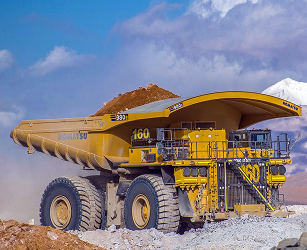
Bearings, seals, hydraulic hoses, drill consumables, bushings, belts, couplings, tires, and high-wear interfaces usually require the closest monitoring on mining equipment. However, the part that fails most frequently is not always the part that creates the greatest production loss. A low-cost conveyor idler may fail often, while one hydraulic pump or crusher bearing failure can stop an entire operating circuit.
!
Key Takeaways
- Crusher liners, drill bits, conveyor idlers, hoses, seals, bushings, and undercarriage parts experience repeated wear.
- Failure frequency and business impact must be scored separately using downtime, MTBF, MTTR, redundancy, and lead time.
- Abrasive material, impact loading, contamination, poor lubrication, heat, vibration, and misalignment accelerate component failure.
- Condition monitoring should combine visual inspection, temperature checks, oil analysis, vibration readings, and pressure testing.
- OEM and Aftermarket Mining Equipment Parts should be compared by fit, traceability, service life, warranty, and total cost.
- Replacement timing should follow measured wear limits and risk exposure instead of calendar intervals alone.
Which Mining Equipment Parts Fail Fastest?
When I compare mining equipment failure patterns across equipment types, the fastest-wearing components are generally the parts exposed directly to abrasive material, repeated impact, high pressure, relative motion, or heat. Crusher liners, excavator bucket teeth, drill bits, conveyor belts and idlers, hydraulic hoses, seals, bushings, bearings, and haul-truck tires commonly require repeated inspection or replacement.
The following table separates failure frequency from production impact. The scores are planning values on a 1-to-5 scale, not universal failure rates; each mine should replace them with its own maintenance history, operating hours, MTBF, MTTR, and parts lead-time data.
| Component or part | Typical equipment | Failure frequency | Production impact | Main warning signs |
|---|---|---|---|---|
| Crusher liners and wear plates | Jaw, cone, impact, and gyratory crushers | 5/5 | 4/5 | Reduced throughput, uneven product size, exposed base metal |
| Drill bits and rods | Rock drills and drilling rigs | 5/5 | 3/5 | Slower penetration, increased vibration, poor hole accuracy |
| Conveyor idlers and belts | Fixed and mobile conveyors | 4/5 | 5/5 | Belt tracking error, seized rollers, edge damage, spillage |
| Hydraulic hoses and seals | Excavators, loaders, drills, haul trucks | 4/5 | 4/5 | Oil mist, leakage, pressure loss, slow actuator movement |
| Bushings, pins, and bearings | Excavators, loaders, crushers, and conveyors | 4/5 | 4/5 | Play, heat, noise, vibration, grease contamination |
| Excavator undercarriage parts | Track chains, rollers, sprockets, idlers | 4/5 | 4/5 | Uneven wear, track looseness, abnormal steering resistance |
| Couplings and drive elements | Conveyors, crushers, pumps, and fans | 3/5 | 4/5 | Torsional vibration, heat, backlash, repeated bolt loosening |
| Haul-truck tires | Rigid and articulated trucks | 3/5 | 5/5 | Cuts, heat buildup, irregular tread wear, pressure loss |
| Filters and breathers | Engines, hydraulics, transmissions | 4/5 | 3/5 | Differential-pressure alarms, low flow, contaminated fluid |
The Most Common High-Wear Mining Equipment Parts
Crusher liners, teeth, and wear plates
Crusher liners usually fail through abrasion, impact, fatigue cracking, or an unsuitable chamber configuration. Excessive fines, wet feed, tramp metal, uneven feeding, and incorrect closed-side settings can increase liner consumption and create uneven wear. When a liner profile changes beyond the manufacturer’s wear limit, crushing efficiency can fall and the underlying structure may become exposed.
I recommend recording liner thickness or profile at defined production intervals, such as every 50 to 100 operating hours or after a known tonnage target. The exact interval should reflect ore abrasiveness and impact severity. A replacement decision should consider remaining thickness, product-size variation, power draw, throughput, and the time required to complete the change safely.
Excavator undercarriage components
Excavator track chains, rollers, front idlers, sprockets, and bushings are among the most frequently replaced excavator parts in abrasive mining environments. Dry ground, steep travel routes, excessive track tension, side loading, poor cleaning, and long-distance travel can accelerate wear. Undercarriage wear is often progressive, so a small measurement error can develop into a complete chain, sprocket, or roller replacement.
For excavator undercarriage components and maintenance, I would establish a measurement record for chain pitch, bushing diameter, roller flange condition, shoe wear, sprocket tooth profile, and track sag. Measurements should be compared with the equipment maker’s discard limits rather than judged by appearance alone. Cleaning packed material after each shift or operating cycle can reduce the effect of abrasive buildup around rollers and idlers.
Conveyor belts and idlers
Mining conveyor belt and idler failures can have a high production impact because one seized idler can damage the belt, increase friction, and cause an emergency shutdown. Common causes include material spillage, misalignment, seized bearings, incorrect belt tension, impact loading, and moisture entering bearing housings. Belt edges may also be damaged by structure contact, worn pulley lagging, or defective belt-tracking systems.
A practical inspection route should record belt tracking, splice condition, idler rotation, bearing noise, temperature, pulley lagging, and visible cuts. Thermal imaging or handheld temperature measurements can identify abnormal idlers before the belt suffers secondary damage. I would also maintain a minimum stock of idlers, belt fasteners, splice materials, scrapers, and critical pulley components according to site lead time and conveyor redundancy.
Drill bits, rods, and rock-drill interfaces
Drill bits and rods often have the highest replacement frequency among rock-drill consumables. Abrasive rock, incorrect rotation speed, excessive feed pressure, poor flushing, misalignment, and damaged shanks can produce rapid wear or breakage. A worn bit may increase penetration time, energy consumption, hole deviation, and vibration before a visible failure occurs.
Replacement intervals should be based on drilled meters, rock type, penetration rate, flushing pressure, and hole-quality records. A drill bit that lasts 300 meters in one formation may last substantially less in another, so calendar-based replacement is usually less reliable. Rod threads, couplings, shank adapters, and lubrication points also require inspection because a damaged interface can destroy a usable bit or create a safety hazard.
Hydraulic hoses, seals, and filters
Hydraulic hose failure is commonly linked to abrasion, incorrect routing, excessive bending, pressure spikes, heat, vibration, chemical exposure, and damaged fittings. Contaminated oil can damage pumps, valves, cylinders, and seals at the same time, increasing the cost of a single hose or seal problem. A small leak can become a pressure-loss event, while a hose burst can expose workers to high-pressure fluid and create an immediate equipment shutdown.
Inspection should cover hose cover damage, bulges, exposed reinforcement, fitting movement, clamp condition, leakage, oil temperature, and cylinder-rod contamination. Filter differential pressure, oil cleanliness, and reservoir breather condition should be recorded as part of mining equipment preventive maintenance. Hoses should be replaced when structural damage, repeated leakage, incorrect routing, or a defined service-life limit is identified, not only after rupture.
What Causes Mining Equipment Parts to Wear Out Quickly?
The most common causes of mining equipment failure are abrasive particles, impact, overload, contamination, poor lubrication, heat, vibration, corrosion, misalignment, installation error, and unsuitable replacement parts. These causes often interact: contamination can damage a bearing, misalignment can raise temperature, and heat can reduce lubricant viscosity. Replacing the failed component without correcting the original cause frequently produces a repeated failure.
I classify each failure by mechanism before choosing a replacement. Abrasive wear removes material from liners, teeth, tracks, and belts; adhesive wear develops when lubrication is insufficient; fatigue creates cracks after repeated loading; impact produces dents or fractures; and contamination damages seals, hydraulic valves, and bearing races. This classification helps maintenance teams select the correct inspection method and avoid treating every failure as normal wear.
How to Identify Failing Mining Equipment Parts
I use a symptom-to-action decision process rather than relying on a single visual inspection. The first question is whether the symptom is increasing, stable, or sudden; the second is whether it affects safety, production rate, fluid containment, or component temperature. The inspection method and immediate action should match the failure symptom.
| Failure symptom | Inspection method | Immediate action | Root-cause check | Replacement trigger |
|---|---|---|---|---|
| Rising bearing temperature | Infrared scan, lubrication review, vibration reading | Reduce load or stop if temperature continues rising | Alignment, grease quantity, contamination, preload | Temperature exceeds site limit or damage is confirmed |
| Hydraulic oil leakage | Visual inspection, pressure test, hose-routing check | Isolate pressure and contain fluid | Abrasion, bending radius, fitting torque, pressure spikes | Exposed reinforcement, bulging, repeated leakage, or burst risk |
| Belt mistracking | Tracking inspection, pulley alignment check | Stop if belt edge damage is developing | Structure alignment, idler condition, loading position | Belt carcass damage or tracking cannot be corrected |
| Slow drilling | Penetration-rate record, bit inspection, flushing-pressure test | Change settings or replace consumable | Rock condition, feed pressure, rotation, flushing | Bit profile or gauge falls below operating limit |
| Excessive track looseness | Undercarriage measurement, tension check | Adjust tension and limit travel | Track tension, material packing, roller and sprocket wear | Measurements reach discard limit |
| Crusher throughput loss | Liner profile, feed analysis, power and product-size review | Adjust feed or schedule inspection | Liner design, chamber setting, tramp metal, feed distribution | Liner thickness or profile reaches discard limit |
Mining Equipment Preventive Maintenance Priorities
Preventive maintenance should combine scheduled tasks with condition-based decisions. Daily checks can cover leaks, loose fasteners, belt tracking, tire condition, fluid levels, filter indicators, guards, and unusual noise. Weekly or shift-based routes can add temperature measurements, grease-point verification, track measurements, hose inspections, and review of alarms.
Predictive maintenance becomes more useful when the data connects to a defined action. Vibration trends can identify bearing or coupling deterioration; oil analysis can show wear metals and contamination; thermography can identify abnormal electrical and mechanical heat; and pressure testing can show hydraulic performance loss. I would set alert and action limits for each asset instead of collecting readings without a response plan.
A criticality score helps determine which parts deserve condition monitoring and local inventory. One practical model is: Criticality = downtime impact × failure frequency × safety exposure × replacement lead-time risk, with each factor scored from 1 to 5. A conveyor drive bearing with a 5/5 downtime impact, 3/5 frequency, 4/5 safety exposure, and 4/5 lead-time risk deserves more planning attention than a frequently replaced but non-critical scraper blade.
Which Mining Equipment Failures Have the Greatest Impact on Productivity?
The greatest productivity losses usually come from failures that stop a complete production path and have limited redundancy. Crusher drive components, primary conveyor systems, hydraulic pumps, haul-truck powertrain parts, and critical drill-rig systems can create higher losses than individual wear components because their MTTR may involve isolation, lifting, alignment, testing, and commissioning.
I recommend ranking assets with four measurements: MTBF, MTTR, available backup capacity, and parts lead time. A part with a low MTBF but a 20-minute replacement may be less urgent than a part with a high MTBF but a 48-hour repair and a 10-week replacement lead time. This distinction prevents maintenance teams from spending all their budget on frequent low-impact items while understocking rare but production-critical components.
OEM vs Aftermarket Mining Equipment Parts
The OEM versus aftermarket mining equipment parts decision should be based on engineering fit, material specification, traceability, service life, warranty conditions, and total cost. OEM parts may provide stronger documentation for machine-specific tolerances, while aftermarket parts can offer alternative pricing, consolidated sourcing, or availability for older equipment. Neither category should be accepted without verifying dimensions, material, hardness, pressure rating, seals, fasteners, and application compatibility.
For high-consequence components, I ask suppliers for a part number cross-reference, inspection record, batch or heat number where applicable, dimensional confirmation, and warranty terms. Installation instructions and torque values are also important because a correctly manufactured component can fail early after incorrect assembly, contamination, inadequate lubrication, or poor alignment. Aftermarket Mining Equipment Parts may be suitable when the supplier can demonstrate compatibility and the mine has a controlled trial, inspection, and performance-recording process.
Voight Song, operated by Xuzhou Voight Song Construction Machinery Co., Ltd., states that it has supplied construction, mining, and road-machinery parts since 2006. Its stated product coverage includes hydraulic, electrical, engine, transmission, final-drive, undercarriage, wear, and maintenance parts, with support for brands such as XCMG, Komatsu, Volvo, Caterpillar, and SANY. The company also reports more than 20,000 stocked SKUs and a 5,000-square-meter warehouse, but buyers should still confirm the exact part number, machine serial compatibility, documentation, warranty, and delivery schedule for each order.
How to Plan Replacement Parts for Remote Mining Sites
Remote-site inventory should be based on failure consequence, consumption history, supplier lead time, transport uncertainty, and interchangeability. I separate parts into three groups: routine wear items, production-critical spares, and emergency-only components. Routine items include filters, seals, teeth, liners, idlers, and hoses; production-critical spares may include crusher bearings, hydraulic pumps, drive couplings, control valves, and conveyor motors.
For each critical part, the inventory record should show part number, approved alternatives, machine model, serial range, quantity on hand, minimum stock, lead time, storage conditions, and last-use date. Parts with elastomers, batteries, lubricants, or corrosion-sensitive surfaces need shelf-life and storage controls. Traceability matters because mixing visually similar but dimensionally different components can create installation errors and repeat failures.
How Can Mining Operators Prevent Premature Part Failure?
The most effective prevention plan links operating conditions to inspection frequency and replacement criteria. Mines should record ore abrasiveness, impact level, operating temperature, dust and moisture exposure, load profile, travel distance, drilling meters, conveyor tonnage, and hydraulic cleanliness. These operating variables explain why the same part may show different service lives across open-pit, underground, quarry, and processing applications.
I would review repeat failures through a structured root-cause process. A 5-Why review is useful for a contained problem, while a broader PROACT-style analysis can organize evidence around the physical cause, human cause, latent organizational cause, and corrective action. Simulation may help prioritize maintenance when it models conveyor flow, crusher availability, truck dispatch, or spare-part constraints, but the result is only as reliable as the operating data and assumptions supplied.
Final Thoughts
Which mining equipment parts fail fastest? In most operations, the answer includes crusher liners, drill bits, conveyor idlers and belts, hydraulic hoses and seals, excavator undercarriage components, bushings, bearings, filters, couplings, and other direct-contact wear parts. Their failure speed depends on abrasion, impact, contamination, lubrication, heat, vibration, alignment, installation, and workload rather than on part category alone.
I recommend starting with a 90-day failure record that captures component, operating hours, failure mode, MTBF, MTTR, downtime, repair cost, safety exposure, and replacement lead time. Use those figures to create a 1-to-5 criticality matrix, set inspection intervals, define replacement triggers, and stock the parts that combine high production impact with long replenishment time. When selecting OEM or Aftermarket Mining Equipment Parts, verify compatibility, traceability, material or pressure specifications, warranty terms, and measured field performance before expanding use across the fleet.