Planetary gear sets explained for heavy equipment begin with one central idea: several gears share the load inside a compact transmission assembly. A typical set uses a sun gear, multiple planet gears, a planet carrier, and an internal ring gear to reduce speed, multiply torque, and transmit power through a small housing. I use this design frequently when explaining final drives, wheel hubs, swing drives, winches, and other power-transmission systems found in construction and mining machinery.
Key Takeaways
- Planetary gear sets distribute torque across multiple planet gears inside compact heavy-equipment transmissions.
- Fixed-member configurations determine whether the system increases torque, reduces speed, or changes rotation direction.
- Final-drive failures often begin with pitting, contamination, bearing damage, overheating, or uneven planet loading.
- Planetary systems provide high torque density but require accurate lubrication, alignment, preload, and backlash control.
- Replacement decisions should compare gear condition, carrier damage, repair cost, downtime, and complete assembly compatibility.
Planetary Gear Components and Operating Principles
The main planetary gear components are the sun gear, planet gears, planet carrier, and ring gear. The sun gear is normally positioned at the center, while two or more planet gears rotate around it. The carrier holds the planet gears on their pins, and the ring gear surrounds the assembly with internal teeth.
Each component performs a different mechanical function, but the system works as a group rather than as isolated gears. The planet gears mesh with both the sun gear and the ring gear, which allows torque to pass through multiple contact points. This arrangement reduces the load carried by any single gear tooth and permits a shorter power-transmission path than many conventional layouts.
!
The carrier is especially important in heavy equipment because it transfers output torque to the next shaft, hub, or housing. Carrier pins and bearings must maintain correct alignment so that each planet gear shares the load. If one planet gear carries significantly more load than the others, localized tooth wear, heat, and bearing stress can develop even when the gear teeth appear serviceable during a quick inspection.
How Planetary Gear Sets Work in Heavy Equipment
A planetary gear set uses a sun gear, planet gears, ring gear, and carrier to provide compact torque multiplication. By fixing, driving, or using different members as the output, the same gearset can produce speed reduction, speed increase, reverse rotation, or direct drive. This flexibility makes planetary systems suitable for final drives, transmissions, winches, swing drives, and torque converters.
- Fix one member: Holding the ring gear, sun gear, or carrier stationary establishes the operating relationship between the remaining members.
- Drive one member: Hydraulic motors, electric motors, engine-driven shafts, or torque converters supply input through the selected gear or carrier.
- Take output from another member: The output member determines final speed, torque, and rotation direction according to the tooth counts and fixed-member arrangement.
For example, when the ring gear is fixed, the sun gear is driven, and the carrier produces output, the carrier generally rotates more slowly than the sun gear while delivering greater torque. A simplified ratio for this arrangement is 1 + R/S, where R is the ring-gear tooth count and S is the sun-gear tooth count. If the ring gear has 84 teeth and the sun gear has 28 teeth, the ratio is 1 + 84/28, or 4:1.
The actual output torque is affected by efficiency, lubrication, bearing drag, seal friction, tooth geometry, and load conditions. A theoretical 4:1 ratio does not mean that input torque is multiplied by exactly four under every operating condition. For service decisions, I compare the calculated ratio with the manufacturer’s specifications, pressure settings, motor displacement, and measured operating temperature.
Why Heavy Equipment Uses Planetary Gear Systems
Heavy equipment requires substantial torque at low output speed, particularly when a machine pushes, digs, climbs, lifts, or turns under load. A planetary gear system can provide this reduction within a short axial length, which helps engineers package a drive inside a wheel hub, track sprocket, winch drum, or swing mechanism. Multiple planet gears also allow torque to be shared around the circumference of the assembly.
The main benefit is torque density, meaning the amount of torque transmitted relative to the size and mass of the gearbox. Planetary systems can also maintain a balanced load path because the planet gears contact the sun and ring gear at several locations. In heavy equipment, that arrangement is useful when available space is limited but the drive must withstand starting loads, reversing, shock events, and repeated duty cycles.
There are limitations. Planetary gearsets have more parts than a simple spur reduction, including planet pins, carrier bearings, thrust washers, seals, and sometimes multiple stages. Repair requires correct assembly order, tooth timing where specified, bearing inspection, axial-clearance measurement, and proper lubrication. Contamination that might cause moderate wear in a simple gearbox can damage several interacting components in a planetary assembly.
Heavy-Equipment Applications and Planetary Final Drives
A planetary final drive converts hydraulic motor speed into the lower wheel or track speed needed for machine movement. Excavators, bulldozers, skid-steer loaders, wheel loaders, mining equipment, and road machinery may use one or more planetary stages inside the final-drive housing. The output commonly connects to a wheel hub, track sprocket, or hub reduction assembly.
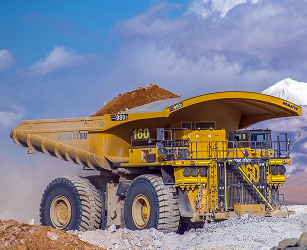
In track drives, the planetary output turns the sprocket that engages the track chain. The system must handle repeated acceleration, counter-rotation, slope loading, and impact from uneven ground. In wheel loaders and mining trucks, planetary hubs can provide reduction near the wheel, reducing the torque carried through upstream shafts while keeping the overall drivetrain compact.
Other applications include swing drives, winch drives, and torque converters. A swing drive controls upper-structure rotation on excavators, while a winch drive converts motor speed into controlled drum torque for lifting or pulling. In torque converters and planetary transmissions for construction machinery, different clutches or brakes hold selected members to create several ratios without requiring a separate gearbox for every speed.
| Application | Typical planetary function | Main service concern |
|---|---|---|
| Track final drive | Reduces speed and multiplies sprocket torque | Tooth wear, bearing damage, oil contamination |
| Wheel hub reduction | Delivers high torque close to the wheel | Seal leakage, overheating, backlash |
| Swing drive | Controls upper-structure rotation | Shock loading, gear pitting, carrier wear |
| Winch drive | Produces controlled lifting or pulling torque | Brake interaction, overload, lubrication |
| Torque converter or transmission | Provides multiple ratios and torque transfer | Clutch wear, pressure loss, heat generation |
Planetary Gear Sets Compared With Other Reducers
I compare planetary gearsets with other reducer types according to torque density, efficiency, shock-load capacity, serviceability, and cost. No design is ideal for every machine. The correct choice depends on the available installation space, expected duty cycle, hydraulic or mechanical input, repair capability, and replacement-parts availability.
| Reducer type | Torque density | Shock-load capacity | Serviceability | Typical heavy-equipment use |
|---|---|---|---|---|
| Planetary | High in a compact housing | High when correctly sized | Moderate to difficult | Final drives, swing drives, winches |
| Spur gear | Moderate | Moderate | Relatively simple | Basic auxiliary drives |
| Helical gear | Moderate to high | Moderate to high | Moderate | Transmissions and industrial drives |
| Bevel gear | Moderate | Moderate | Moderate | Right-angle power transfer |
| Worm gear | High reduction in one stage | Variable; heat can be significant | Moderate | Compact auxiliary mechanisms |
| Cycloidal reducer | High shock resistance | High | Specialized | Heavy-duty industrial and mobile systems |
Spur gears are easier to inspect and often less expensive for simple reductions, but they can produce more noise and lower torque density. Helical gears provide smoother engagement but create axial thrust that requires appropriate bearing support. Bevel gears are useful when the power path must turn through an angle, while worm gears can provide large reduction but may lose more power as heat.
Cycloidal reducers can tolerate substantial shock loading, but their internal eccentric components and manufacturing requirements may increase cost and complicate replacement. Planetary gearsets remain attractive when the machine requires compact dimensions, high reduction, and balanced torque transmission in the same assembly.
Planetary Gear Set Failure Symptoms and Diagnosis
The most useful planetary gear set failure symptoms are changes in noise, temperature, vibration, oil condition, backlash, and machine performance. I do not treat one symptom as proof of one failed component because several faults can create similar operating behavior. A complete diagnosis should compare operating data with the service manual and inspect the gearset after the housing is safely opened.
Tooth Pitting and Scoring
Pitting appears as small cavities or fatigue marks on tooth flanks and usually indicates repeated contact stress, inadequate lubrication, contamination, misalignment, or excessive load. Scoring creates longer scratches or smeared metal surfaces and may indicate oil-film failure or severe debris circulation. If pitting has progressed into spalling, tooth replacement is generally more appropriate than continued operation.
Carrier Cracking and Uneven Planet Loading
Carrier cracks may develop around planet-pin bores, webs, or output splines. A damaged carrier can change the alignment of the planet gears and concentrate load on one side of the gearset. Uneven planet loading may also result from worn pins, distorted bores, incorrect bearing clearance, or assembly errors.
Bearing Failure, Backlash, and Noise
Bearing damage can produce rumbling, growling, vibration, or increasing operating temperature. Excessive backlash may point to tooth wear, worn planet pins, loose bearings, damaged splines, or incorrect assembly. I measure backlash at the specified location rather than judging it only by hand movement because housing and shaft movement can make the clearance appear larger or smaller than it is.
Overheating and Contamination
Overheating can result from incorrect oil viscosity, low oil level, blocked lubrication passages, excessive preload, overloaded operation, or a failing bearing. Metallic particles, water, discoloration, or a burnt odor in the oil require immediate investigation. Continuing to operate with contaminated lubricant can spread damage from one failed bearing or tooth surface to the sun gear, planet gears, ring gear, and carrier.
A practical inspection sequence is:
- Record noise, vibration, temperature, oil level, and operating conditions.
- Check for external leaks, damaged seals, loose mounting bolts, and abnormal shaft movement.
- Drain and inspect lubricant for metal particles, water, discoloration, and unusual odor.
- Remove the assembly according to the service procedure and inspect teeth, pins, bearings, carrier bores, thrust washers, and splines.
- Measure backlash, axial clearance, bearing preload, and gear contact where the manufacturer provides specifications.
- Replace damaged components as a matched repair set when tooth wear or bearing damage affects related parts.
How to Choose a Planetary Gear Set for Heavy Equipment
I start with the exact machine model, serial number, transmission or final-drive identification, and original part number. A photograph alone may help identify a component, but it cannot always confirm tooth count, spline form, bearing dimensions, or the correct production variation. For replacement work, I also record the application, operating hours, failure symptoms, lubricant type, and whether the machine works in mining, earthmoving, lifting, or road construction.
The next check is mechanical compatibility. Confirm ring-gear tooth count, sun-gear tooth count, planet quantity, carrier-pin diameter, bearing dimensions, spline profile, housing fit, seal arrangement, and required clearance. A gearset that physically enters the housing may still fail if the ratio, tooth profile, heat treatment, or output spline does not match the transmission.
I then compare three repair paths: replacing individual gears, installing a matched planetary gearset, or replacing the complete final-drive or transmission assembly. Individual replacement may reduce the initial parts cost when the carrier, bearings, and ring gear remain within specification. A matched set can reduce the risk of mixing worn and new teeth, while a complete assembly may reduce workshop time when contamination has affected most internal components.
Voight Song supports construction machinery parts sourcing for excavators, bulldozers, wheel loaders, road machinery, mining equipment, and other heavy machines. Its stated product coverage includes power-transmission, transmission, final-drive, undercarriage, hydraulic, engine, electrical, and maintenance parts. For identification, I would provide the part number, machine model, serial number, nameplate information, or clear photographs before requesting compatibility confirmation.
The company reports more than 20 years of industry experience, more than 20,000 stock-keeping units, and a 5,000-square-meter warehouse. Those figures are relevant when a fleet needs multi-brand sourcing or consolidated orders, but they do not replace technical verification of a planetary gearset. I would still request tooth-count confirmation, material or heat-treatment details where available, dimensional drawings, warranty terms, inspection records, and a written statement of machine compatibility.
Maintenance Practices That Extend Service Life
Correct lubrication is the first maintenance requirement. I follow the machine manufacturer’s oil grade, fill level, replacement interval, and cleanliness requirements rather than selecting oil by appearance or price. Low oil level can remove the protective film from gear teeth and bearings, while excessive oil can increase churning losses and operating temperature.
I also inspect seals, breathers, magnetic drain plugs, mounting bolts, and external case damage during scheduled service. A leaking seal allows lubricant loss and can admit water or abrasive material, particularly on machines working in mud, quarry dust, or wet job sites. Trend records for temperature, noise, and oil debris are more useful than a single inspection because gradual deterioration can be identified before a total drive failure.
Conclusion
Planetary gear sets explained for heavy equipment are compact reduction systems that use a sun gear, planet gears, carrier, and ring gear to transmit high torque through multiple load paths. Their main advantages are torque density, flexible gear-ratio configurations, compact packaging, and suitability for final drives, wheel hubs, track drives, swing drives, winches, and Transmissions for Heavy Equipment.
The main tradeoff is service complexity. Pitting, carrier cracking, bearing failure, overheating, contamination, backlash, and uneven planet loading can damage the complete assembly if operation continues without diagnosis. I recommend confirming the ratio, tooth counts, dimensions, bearing condition, lubrication requirements, and machine serial number before selecting a replacement.
For a practical next step, record the machine model, serial number, existing part number, failure symptoms, lubricant condition, and photographs of the assembly. Then compare an individual-component repair, a matched planetary gearset, and a complete drive assembly using parts cost, labor time, downtime exposure, and compatibility evidence. That process provides a more reliable basis for selecting planetary gear sets explained for heavy equipment than price comparison alone.