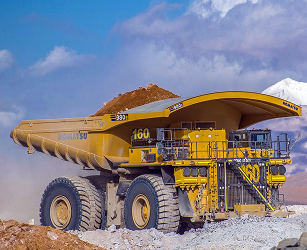
When I buy Aftermarket Caterpillar Heavy Equipment Parts, I do not judge them by price or appearance alone. I verify the exact machine application, supplier traceability, technical specifications, physical workmanship, test evidence, warranty, and expected operating cost before placing an order. This process helps reduce incorrect fitment, premature failure, installation delays, and repeat purchasing.
In this guide, I explain How to Verify Quality Before Buying Cat Aftermarket Parts for excavators, wheel loaders, bulldozers, mining equipment, and other Caterpillar machines. I also use practical examples from parts sourcing work at Voight Song to show how buyers can assess replacement parts before installation.
!
Understanding CAT Aftermarket Parts
CAT aftermarket parts are replacement components manufactured by companies other than Caterpillar. They may be designed to match a Caterpillar machine model, part number, dimensional specification, or functional requirement, but they are not automatically equivalent to genuine CAT parts. Their suitability depends on material selection, manufacturing control, inspection records, fitment accuracy, and supplier support.
I treat aftermarket parts as a broad category rather than a single quality level. Some suppliers provide documented specifications, batch traceability, inspection reports, and warranty terms, while others offer only a photograph and a general compatibility claim. The buyer must therefore verify the evidence behind the part before comparing prices.
Aftermarket parts can include filters, seals, hydraulic pumps, cylinders, engine components, undercarriage parts, electrical components, bearings, cooling-system parts, and wear parts. Each category requires a different inspection depth because a minor dimensional error in a seal may cause leakage, while an unsuitable engine or hydraulic component can create substantial equipment damage and downtime.
How to Verify Quality Before Buying CAT Aftermarket Parts
I use this five-part process before approving a replacement part:
- Verify the exact machine model, serial number, PIN, part number, and parts-diagram position.
- Confirm the supplier’s legal identity, manufacturer information, traceability process, and certifications.
- Review dimensions, materials, performance specifications, test reports, and production evidence.
- Inspect packaging, labels, part markings, surface finish, workmanship, and a physical sample.
- Validate warranty coverage, return conditions, technical support, and dealer assistance before installation.
This sequence separates compatibility verification from product evaluation. A part can be well manufactured but still be unsuitable for a specific machine configuration, serial-number range, operating pressure, or production year.
Verify Machine Compatibility Before Comparing Prices
The first check is not the supplier’s catalog description; it is the machine identity. I record the machine model, serial number, product identification number, engine model, current part number, and the location of the component in the parts diagram. For used parts, I also photograph the old component, including mounting points, connectors, casting marks, and dimensions.
A part number alone may not be sufficient because manufacturers sometimes supersede numbers, change designs, or apply different versions to different serial-number ranges. I ask the supplier to confirm whether the proposed part is suitable for the complete machine identification, not merely whether it is “for” a particular model family.
| Information to verify | Why it matters |
|---|---|
| Machine model | Identifies the general equipment platform |
| Serial number or PIN | Confirms production range and configuration |
| Part number | Identifies the intended component or replacement reference |
| Parts-diagram position | Prevents ordering a visually similar component |
| Engine or system specification | Confirms pressure, voltage, flow, size, or capacity |
| Old-part photographs | Helps identify changes, connectors, and mounting details |
When asking how to verify a CAT part number, I compare at least three sources: the machine documentation, the parts diagram, and the supplier’s written fitment confirmation. If these sources disagree, I stop the order until the discrepancy is resolved.
Use a CAT Aftermarket Parts Quality Checklist
A CAT aftermarket parts quality checklist gives me a consistent way to compare suppliers and prevents an attractive price from hiding missing evidence. I request written information instead of relying on verbal assurances or product photographs.
Supplier identity and traceability
I check the company’s registered name, operating location, product scope, years of relevant experience, and the person responsible for technical confirmation. The supplier should identify whether it is the manufacturer, an authorized distributor, or a trading company sourcing from another factory.
For critical components, I request the manufacturer’s name, production batch, manufacturing date, inspection records, and a traceable invoice or packing document. A supplier that cannot identify the production source cannot provide a reliable failure investigation if the part fails in service.
Certifications and manufacturing evidence
Certifications should relate to the actual product or production facility rather than appear as unexplained logos on a sales page. I ask what standard the certificate covers, who issued it, when it expires, and whether the supplied product is manufactured under the same system.
For metal parts, I may request material certificates, hardness results, heat-treatment records, coating specifications, or dimensional inspection reports. For hydraulic, electrical, and engine components, I ask for the relevant pressure, voltage, flow, sealing, load, or performance test evidence.
Specifications and acceptance criteria
The supplier should provide measurable information such as dimensions, tolerances, material grade, hardness range, operating pressure, flow rate, voltage, temperature range, load rating, or filtration rating where applicable. The specification should identify the test method or reference document whenever possible.
I do not accept “OEM standard” as a complete technical answer. The supplier must explain which dimensions and performance values are being matched, which values are different, and whether the difference affects installation, service life, or machine operation.
Inspect the Part Before Installation
Before installation, I compare the delivered part with the approved quotation, drawings, photographs, and original component. I inspect the packaging for correct labels, part references, quantity, batch information, manufacturing date, protective materials, and signs of moisture or impact damage.
I then examine the part itself for casting defects, cracks, burrs, sharp edges, incomplete machining, uneven coating, corrosion, contamination, damaged threads, poor welds, distorted mounting faces, and inconsistent surface finish. For rubber and sealing parts, I check for hardening, swelling, cuts, deformation, and storage-related damage.
The inspection depth depends on component risk. A routine filter may require label, dimensions, seal, media, and contamination checks, while a hydraulic pump or engine component may require documented performance testing and more detailed dimensional inspection.
| Component type | Checks I prioritize |
|---|---|
| Filters | Media construction, seal dimensions, filtration rating, bypass specification, contamination control |
| Seals and gaskets | Material type, hardness, dimensions, elasticity, surface damage, temperature compatibility |
| Hydraulic components | Port size, rotation, pressure, flow, leakage, displacement, test report |
| Undercarriage parts | Dimensions, hardness, heat treatment, wear pattern, bolt-hole accuracy, material condition |
| Engine parts | Material, machining accuracy, clearances, balancing, surface finish, test documentation |
| Electrical parts | Voltage, connector design, resistance, signal compatibility, insulation, functional test |
Use Dimensional, Material, and Performance Checks
For a sample inspection, I measure critical dimensions with calibrated tools rather than assuming that visual similarity means interchangeability. I check outside and inside diameters, shaft dimensions, bolt-hole spacing, mounting-face thickness, port locations, connector positions, and overall length against the approved drawing or original part.
I use the manufacturer’s specified tolerance whenever one is available. If no tolerance is provided, I do not invent an acceptance limit; instead, I request the technical drawing or ask the supplier to confirm the allowable deviation in writing. This protects the buyer from accepting a part that fits loosely, binds during operation, or changes system alignment.
Material verification is equally important for parts exposed to heat, pressure, impact, abrasion, or repeated loading. Depending on the component, evidence may include a material certificate, hardness test, coating thickness, chemical composition, heat-treatment record, or laboratory report.
For hydraulic and pneumatic parts, pressure or leakage testing should match the component’s intended operating conditions and safety requirements. For load-bearing or rotating parts, the supplier should explain the applicable load, balance, fatigue, or functional test. I treat a test report without a part number, batch number, date, and measurable result as incomplete evidence.
Compare Genuine CAT, Cat Reman, Used, and Aftermarket Parts
When comparing genuine CAT parts vs aftermarket parts, I consider more than the initial quotation. Genuine parts typically offer direct brand support and established documentation, while Cat Reman parts may provide a factory remanufacturing route for eligible components. Used parts can reduce purchase cost but may have unknown operating hours, repair history, or remaining service life.
Aftermarket parts may be suitable when the supplier can demonstrate correct fitment, measurable specifications, controlled manufacturing, and practical warranty support. The decision should reflect the component’s failure consequence, not only the difference between invoice prices.
| Option | Fitment evidence | Typical cost position | Main risk to assess | Suitable use |
|---|---|---|---|---|
| Genuine CAT | Brand-specific documentation and part references | Highest initial cost in many cases | Purchase price and availability | Critical systems and strict documentation requirements |
| Cat Reman | Factory remanufacturing information where available | Often below new genuine parts | Eligibility, exchange conditions, reman scope | Major repair with controlled reman support |
| Used | Depends on inspection and history | Often lowest initial cost | Unknown wear, damage, or remaining life | Non-critical repairs or temporary operation |
| Aftermarket | Depends on supplier and manufacturer evidence | Low to mid-range | Variable materials, fit, testing, and warranty | Cost-controlled repairs with verified specifications |
Calculate Total Cost of Ownership
I compare total cost of ownership rather than selecting the lowest purchase price. My calculation includes the part price, freight, duties, installation labor, consumables, expected service interval, warranty probability, downtime exposure, and the cost of removing and replacing a failed component.
A simple cost-per-operating-hour estimate is useful: total ownership cost divided by expected operating hours. For example, a part priced at $600 and expected to operate for 3,000 hours has an initial part cost of $0.20 per operating hour. A $350 part that lasts only 1,000 hours has an initial part cost of $0.35 per operating hour before downtime and labor are included.
This calculation does not prove that the more expensive option is better. It shows what additional evidence is needed. If a lower-priced supplier provides documented testing, accurate fitment, a written warranty, and batch traceability, the economic case may be reasonable; if the supplier provides none of these, the lower invoice price may conceal a higher replacement risk.
How to Identify Reliable CAT Aftermarket Parts Suppliers
When I assess a supplier, I look for a clear product scope, identifiable technical staff, consistent part-number support, written specifications, inspection records, and defined warranty procedures. A supplier should be able to explain how it identifies parts using model numbers, serial numbers, product identification numbers, photographs, and parts diagrams.
Voight Song provides construction machinery parts sourcing across categories such as engine, hydraulic, electrical, transmission, cooling, undercarriage, and maintenance components. Its published company information identifies Xuzhou Voight Song Construction Machinery Co., Ltd. as a construction machinery parts supplier established in 2006, with support for Caterpillar and other major equipment brands.
I would still apply the same verification process to any supplier, including Voight Song. I request a written quotation, exact part reference, fitment confirmation, technical specification, lead time, warranty terms, packaging details, and inspection evidence before approving a critical component.
Pre-Purchase Scorecard and Red Flags
I use a 100-point scorecard to make supplier comparisons more objective. Compatibility receives 30 points, technical documentation 20, manufacturing traceability 15, inspection and test evidence 15, warranty and returns 10, and supplier communication 10. I normally require at least 80 points for routine components and a higher threshold for engine, hydraulic, structural, or safety-related parts.
The following red flags require clarification or rejection:
- The listing gives only a machine brand without a model, serial-number range, or part reference.
- The supplier claims “OEM quality” but provides no dimensions, material information, or test evidence.
- The price is unusually low without an explanation of material, production source, or warranty scope.
- Packaging has inconsistent labels, missing batch information, damaged seals, or unclear manufacturer identity.
- Warranty terms exclude the main failure modes or provide no return inspection process.
- The supplier refuses to provide a sample, drawing, inspection report, or written fitment confirmation.
- Product photographs show different markings, connectors, or mounting features from the quoted part.
Validate Warranty and Support Before Installation
A warranty is useful only when its coverage and process are clear. I check the warranty period, operating conditions, excluded causes, installation requirements, evidence needed for a claim, return freight responsibility, replacement timing, and whether consequential downtime is excluded.
I also confirm whether the supplier can provide installation guidance, troubleshooting support, replacement seals, updated part references, and technical review if the machine has a modified configuration. These details matter because some failures are caused by contamination, incorrect installation, excessive pressure, electrical mismatch, or a separate system fault rather than the replacement part alone.
Before installation, I record the part number, batch number, photographs, measurements, and visible condition. After installation, I document operating hours, pressure or temperature readings where relevant, leakage checks, noise, vibration, and the first service inspection. This record improves warranty communication and helps determine cost per operating hour during future purchases.
Conclusion
To answer How to Verify Quality Before Buying Cat Aftermarket Parts, I begin with exact machine and part-number verification, then review supplier identity, traceability, specifications, materials, test evidence, physical workmanship, warranty, and support. I compare genuine CAT, Cat Reman, used, and aftermarket options by fitment, expected service life, availability, warranty, and total cost of ownership rather than invoice price alone.
My next step is to complete a written CAT aftermarket parts quality checklist for every critical order. I confirm the model, serial number, PIN, part diagram, dimensions, materials, test records, packaging, markings, warranty, and installation requirements before purchase. Whether I source from Voight Song or another supplier, this evidence-based process gives me a clearer basis for deciding whether an aftermarket component is suitable for the machine and the operating conditions.