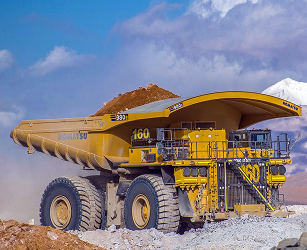
Cutting fleet maintenance costs with Cat aftermarket parts works best when I combine verified compatibility, preventive maintenance, condition monitoring, warranty recovery, and lifecycle-cost analysis. A lower purchase price alone does not guarantee savings. Fleet operators must also measure installation labor, failure risk, equipment downtime, emergency rentals, lost production, and expected component life before approving a replacement part.
- Classify each component by failure risk, operating environment, and consequence of downtime.
- Compare genuine Cat, remanufactured, and aftermarket options using total lifecycle cost.
- Confirm fitment through the part number, machine model, serial number, nameplate, and photographs.
- Pilot suitable replacement parts while tracking failures, service hours, warranty claims, and downtime.
- Standardize the parts that meet cost, reliability, availability, and maintenance performance targets.
!
What You Need Before Starting
Before changing a parts strategy, I collect twelve months of maintenance records for each Caterpillar machine or equipment group. The records should show part purchases, technician hours, repeat failures, emergency freight, rental equipment, production interruptions, and operating hours. Without this baseline, a fleet manager may mistake a cheaper invoice for a lower maintenance cost.
I also separate routine wear items from failure-critical components. Filters, seals, belts, hoses, bushings, cutting edges, and undercarriage wear parts may be suitable for controlled aftermarket sourcing when specifications and fitment are confirmed. Engine control units, hydraulic pumps, transmission components, braking systems, and structural parts require stricter supplier verification because a failure can create safety exposure, extended downtime, or secondary damage.
A practical starting file should contain the following information:
- Machine make, model, serial number, engine configuration, and operating hours.
- Original part number, superseded part numbers, and the installed component specification.
- Failure history, replacement interval, installation labor, and downtime duration.
- Operating conditions such as dust, heat, moisture, vibration, load, altitude, and duty cycle.
- Warranty terms, return requirements, test documents, and supplier response procedures.
Voight Song Machinery Parts, also known as Voight Song, supports part identification using part numbers, machine models, serial numbers, nameplates, and old-part photographs. Its stated business information indicates more than 20 years of industry experience, over 20,000 stock-keeping units, and a 5,000-square-meter warehouse. I would still verify every Caterpillar replacement part against the machine record before placing a production-critical order.
Step 1 — Map the Main Fleet Maintenance Cost Drivers
What to Do
I begin by dividing maintenance expenditure into five cost groups: parts, labor, downtime, rentals, and lost productivity. Parts include purchase price, freight, customs, taxes, consumables, and expedited delivery. Labor includes inspection, removal, cleaning, installation, testing, troubleshooting, and rework.
Downtime should be calculated from the hours the machine is unavailable, not only from the technician’s repair time. If a loader is stopped for 18 hours but requires only six labor hours, the remaining 12 hours may represent lost production or a rental requirement. A complete calculation should also include secondary damage, idle crews, delayed hauling, missed delivery commitments, and overtime recovery.
Why This Matters
A replacement component priced 25% below the current option may produce no saving if it adds four hours of installation time or fails 30% earlier. Conversely, an aftermarket component with a similar service interval may produce a measurable reduction when its purchase price, delivery time, and warranty process are favorable.
I use this basic model for each part category:
Expected failure cost can be estimated as the probability of failure multiplied by the financial effect of that failure. For example, if a component has a 10% estimated failure probability during the planned service period and each failure costs $8,000 in downtime, labor, and secondary damage, the expected failure cost is $800 before considering warranty recovery.
Common Mistakes to Avoid
- Comparing invoice prices only: Include freight, labor, downtime, and warranty administration.
- Ignoring repeat failures: A part that fails twice during the normal service period should be evaluated as a system cost, not a single purchase.
- Using one cost model for every machine: Mining, rental, municipal, construction, and agricultural fleets have different utilization and downtime values.
Step 2 — Build a Cat-Specific Parts Decision Matrix
What to Do
I classify replacement decisions into three practical options: genuine Cat parts, remanufactured parts, and qualified aftermarket parts. The selection depends on component criticality, operating conditions, warranty requirements, expected service life, and the cost of equipment downtime.
| Application condition | Preferred option | Reason for the decision |
|---|---|---|
| Safety-critical, warranty-sensitive, or failure-intensive component | Genuine Cat part | Reduces specification uncertainty and may preserve required warranty coverage |
| Rebuildable core with known inspection and testing history | Remanufactured part | Can reduce acquisition cost while retaining a controlled refurbishment process |
| Routine wear item or non-critical replacement with verified fitment | Qualified aftermarket part | May reduce purchase cost and improve availability when specifications are confirmed |
| Harsh duty cycle with severe heat, dust, vibration, or high loads | Genuine Cat or tested remanufactured option | The cost of early failure and downtime may exceed the initial price difference |
| Older machine with limited dealer availability | Aftermarket or remanufactured option after pilot testing | Extends sourcing options when original parts are difficult to obtain |
Why This Matters
The question is not simply whether Cat aftermarket parts are cheaper than OEM parts. The useful question is whether the replacement achieves an acceptable cost per operating hour under the actual fleet duty cycle. For a low-use municipal machine, purchase price and availability may dominate the calculation. For a continuously operating mining truck, component life, failure consequences, and response time may carry greater weight.
I document the decision with a score from 1 to 5 for compatibility evidence, supplier traceability, expected service life, warranty protection, availability, and failure consequence. Any part scoring 1 for compatibility evidence or warranty clarity is held for technical review rather than approved for immediate fleet-wide use.
Common Mistakes to Avoid
- Treating all aftermarket parts as one category: Supplier controls, materials, testing, and warranty terms differ between manufacturers.
- Replacing a critical component without a trial plan: Use a controlled pilot on selected machines before expanding the purchase.
- Assuming a brand reference proves compatibility: Confirm the exact machine configuration and part-number relationship.
How Cutting Fleet Maintenance Costs with Cat Aftermarket Parts Works
The cost reduction comes from combining several smaller improvements rather than relying on one discount. Qualified Cat aftermarket parts can lower acquisition cost or improve availability, while preventive maintenance reduces avoidable failures. Better parts identification limits incorrect orders, and consolidated purchasing can reduce duplicated freight, handling, and supplier administration.
I also compare the replacement against the maintenance schedule. If a seal kit, hose, filter, or wear component is replaced during a planned service window, the labor may be shared with other scheduled work. If the same component fails unexpectedly, the fleet may pay for emergency labor, express shipping, overtime, and equipment rental.
For this reason, a part’s value should be measured as cost per service hour, not price per unit. A $600 part operating for 3,000 hours costs $0.20 per service hour before labor and downtime. A $450 part operating for 1,500 hours costs $0.30 per service hour, even though its purchase price is lower.
Step 3 — Verify Supplier Quality, Compatibility, and Warranty Terms
What to Do
I request the complete identification package before approving a Caterpillar replacement part. The package should include the proposed part number, applicable machine models, serial-number range, dimensions where relevant, material or seal information for critical applications, available test records, country of origin, stock status, lead time, warranty duration, and return procedure.
A supplier should be able to explain how it handles incorrect fitment, early failure, damaged shipments, and warranty evidence. I also ask whether the part is sourced as genuine, OEM, remanufactured, or alternative aftermarket equipment, because those categories have different commercial and technical implications.
Voight Song Machinery Parts states that it can support original, OEM, and replacement sourcing according to the buyer’s requirements, budget, and lead-time needs. It also describes small-batch trial orders, customized packing, order consolidation, and technical review using photographs and machine information. These services can support a controlled evaluation, but the fleet operator should define acceptance criteria before ordering.
Why This Matters
Compatibility verification protects more than the part purchase. An incorrect hydraulic seal, sensor, controller, or engine component can create additional labor, contamination, diagnostic time, and secondary damage. A documented review also gives the fleet manager evidence for procurement approval and later ROI measurement.
I use a three-point verification gate:
- Identity: Match the part number, supersession information, machine model, serial number, and physical configuration.
- Application: Confirm temperature, pressure, load, fluid, dimensions, electrical specifications, and environmental exposure.
- Commercial protection: Confirm warranty coverage, claim evidence, return timing, replacement responsibility, and freight treatment.
Common Mistakes to Avoid
- Approving from a photograph alone: Photos help identification but cannot replace model, serial-number, and specification checks.
- Leaving warranty terms informal: Record coverage length, exclusions, claim documents, and response deadlines on the purchase order.
- Failing to quarantine suspect stock: Keep unverified parts separate until inspection and receiving checks are complete.
Step 4 — Use Preventive Maintenance Planning to Reduce Downtime
What to Do
I connect parts purchasing to a fleet preventive maintenance planning system. Each machine should have inspection intervals based on operating hours, calendar time, condition, and duty cycle. The schedule should identify which parts are inspected, which are measured, which are replaced, and which are kept as emergency stock.
Condition checks may include fluid analysis, filter inspection, hose and fitting examination, electrical fault-code review, undercarriage measurement, hydraulic pressure testing, temperature monitoring, vibration checks, and visual inspection for cracking or leakage. The objective is to replace a component during planned downtime before the failure affects production.
I also classify inventory into three levels: routine stock, scheduled-service stock, and emergency-critical stock. Routine items can be replenished through normal purchasing. Scheduled-service items should arrive before the maintenance window. Emergency-critical items should be stocked when the cost of waiting exceeds the carrying cost of inventory.
Why This Matters
Preventive maintenance reduces fleet maintenance costs by moving work from an unplanned event to a controlled maintenance window. It also gives technicians time to inspect adjacent components, combine labor activities, and verify the repair before the machine returns to service.
I track planned versus unplanned maintenance hours, mean time between failures, mean time to repair, repeat repair rate, stockout events, and downtime hours per machine. A useful monthly review compares these indicators by part type and supplier, rather than only by machine.
Common Mistakes to Avoid
- Replacing everything at fixed intervals: Condition data may show that some components need earlier or later action.
- Stocking too many low-use parts: Excess inventory ties up cash and increases obsolescence risk.
- Tracking purchases without operating hours: Cost per machine or cost per service hour provides more useful comparison.
How Do You Calculate Total Fleet Maintenance Costs?
I calculate total fleet maintenance costs by combining direct and indirect expenses over the same reporting period. The calculation should include parts, freight, technician labor, outside repair, inspections, consumables, downtime, rentals, production losses, emergency logistics, and warranty recovery. I then divide the total by operating hours, production units, or another consistent output measure.
For a more accurate comparison, I calculate the result separately for genuine Cat, remanufactured, and aftermarket components. I also record the planned service life and actual removal date for each part. This prevents a short-lived component from appearing economical simply because its original invoice was lower.
Step 5 — Pilot, Measure, and Scale the Parts Program
What to Do
I begin with a small trial involving one or two non-safety-critical part categories and a clearly selected group of machines. The trial should run long enough to capture the relevant inspection interval or operating-hour target. For a high-use fleet, I may use a 90-day review period while continuing to track the component until removal.
The trial record should include machine hours at installation, installation time, technician observations, fitment issues, operating environment, inspection results, failure date, downtime hours, warranty action, and replacement cost. I compare the trial part with the previous component using cost per service hour and total lifecycle cost.
A simple approval rule can require the trial part to meet all of these conditions:
- No unresolved fitment or safety issue.
- No repeat failure during the defined pilot period.
- Documented supplier response within the agreed warranty timeframe.
- Total lifecycle cost at least 10% below the existing option, or a measurable availability benefit that offsets the price difference.
- Service-hour performance within the fleet’s acceptable range for that application.
Why This Matters
Pilot testing turns a sourcing decision into a measurable maintenance program. It protects the fleet from expanding an unsuitable part across dozens of machines and provides evidence for purchasing, engineering, maintenance, and finance teams.
After approval, I standardize the accepted part number, supplier, inspection method, warranty file, reorder point, and replacement interval. I review the results quarterly and suspend a part when failure rate, service life, availability, or warranty recovery falls outside the agreed limits.
Common Mistakes to Avoid
- Declaring success after one installation: One successful repair does not establish service-life performance.
- Measuring only the purchase discount: Include labor, downtime, returns, and secondary damage.
- Expanding without documentation: Record approved applications and exclusions so different machines are not treated as identical.
Why Use Cat Aftermarket Parts for Fleet Maintenance?
Cat aftermarket parts can be appropriate when the component is correctly identified, the application is suitable, supplier controls are documented, and the lifecycle-cost model supports the choice. They may help small construction fleets manage cash flow, rental fleets control repair budgets, municipal fleets maintain older equipment, and mining fleets secure alternative supply for selected applications.
They are not automatically suitable for every component or operating condition. For safety-critical systems, warranty-sensitive machines, severe-duty applications, or components with high secondary-damage risk, genuine Cat or controlled remanufactured parts may produce a lower total cost even when the purchase price is higher.
Conclusion
Cutting fleet maintenance costs with Cat aftermarket parts requires a controlled process rather than a blanket substitution policy. I first measure parts, labor, downtime, rentals, and lost productivity; then I select genuine Cat, remanufactured, or aftermarket components according to application risk and lifecycle cost. Compatibility verification, warranty documentation, preventive maintenance planning, and pilot testing determine whether the expected saving becomes a real operating result.
Fleet managers should begin with one machine group and one non-critical part category. Collect the part number, machine serial number, service hours, failure history, supplier warranty terms, and installation data before ordering. After the pilot, compare cost per service hour, downtime, repeat failures, and warranty recovery against the previous option. This approach helps construction, mining, rental, municipal, and multi-brand fleets reduce avoidable maintenance expense while protecting equipment availability and service performance.